
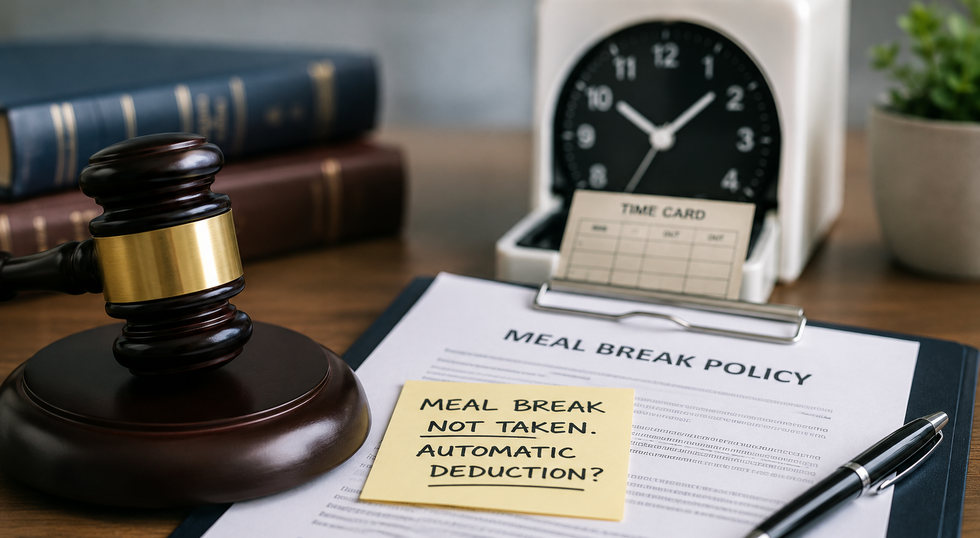
California automatic meal deduction lawsuits have become one of the most common forms of wage and hour litigation in the state. These lawsuits often involve employers that automatically deduct 30 minutes from employee time records for meal breaks even when workers continue performing job duties during lunch or never receive legally compliant meal periods at all. Under California law, employers must do more than simply assume meal breaks occurred. They must actually provide employees with uninterrupted and duty-free meal periods.
According to the California Department of Industrial Relations meal period rules, most non-exempt employees must receive a compliant meal break when working more than five hours in a workday. When employers use automatic deduction systems that fail to reflect reality, lawsuits frequently follow.
What Is an Automatic Meal Deduction Policy?
An automatic meal deduction policy is a payroll or timekeeping practice where an employer's system automatically subtracts meal break time from an employee's workday. For example, an employee may work from 8:00 a.m. to 5:00 p.m., but payroll automatically deducts 30 minutes for lunch regardless of whether the employee actually received a legally compliant break.
These systems are often used in healthcare, warehousing, retail, hospitality, construction, transportation, and security services. While automatic deduction systems are not automatically unlawful, they frequently create legal exposure when employees work through lunch, take interrupted meal periods, or remain on duty during their breaks.
California Meal Break Laws
California has some of the strictest meal break laws in the country. Most non-exempt employees are entitled to a 30-minute unpaid meal period when working more than five hours in a workday. Employees who work more than ten hours are generally entitled to a second meal period as well.
Meal breaks must generally begin before the end of the employee's fifth hour of work. Employees must also be relieved of all duties during the break. If an employer fails to provide a compliant meal period, the employee is typically entitled to one additional hour of pay at their regular rate for each day the violation occurred.
Employees looking for more information regarding California meal and rest break laws may find additional guidance regarding employee rights, missed meal periods, and employer obligations.
Why Automatic Meal Deduction Lawsuits Happen
Many automatic meal deduction lawsuits involve employees who claim they regularly worked through lunch because of workload demands, staffing shortages, production quotas, or employer expectations. Employees may continue answering phones, helping customers, monitoring equipment, responding to emails, or performing other work tasks during their supposed meal periods while the employer's payroll system still deducts time automatically.
These cases often arise when employers fail to accurately track meal periods or ignore signs that employees are missing breaks. In many lawsuits, employees claim supervisors discouraged reporting missed meal periods or made it difficult to correct payroll records.
Common Allegations in California Meal Deduction Lawsuits
Employees filing California automatic meal deduction lawsuits may allege they were denied uninterrupted meal periods, pressured to work through lunch, or forced to take late meal breaks. Other lawsuits involve employees who remained on call during their meal periods or performed job duties while eating.
Some employees also allege employers altered time records to create the appearance of compliant meal periods. Timekeeping systems that automatically insert meal periods despite missed lunches often become central evidence in wage and hour litigation.
The Importance of Accurate Time Records
Timekeeping records are often one of the most important pieces of evidence in California meal deduction lawsuits. Employees commonly rely on punch records showing short, late, or entirely missed meal periods.
California courts have emphasized that employers must maintain accurate meal period records. Noncompliant time records can create a rebuttable presumption that meal break violations occurred, placing significant pressure on employers attempting to defend these claims.
Industries Frequently Targeted
Healthcare providers are sometimes involved in these lawsuits because nurses, medical assistants, and hospital staff may remain busy throughout their shifts. Retail workers sometimes claim they were expected to assist customers during meal periods. Warehouse employees sometimes allege quotas and productivity requirements prevented them from taking timely breaks.
Security guards also frequently file meal deduction claims because they may remain responsible for monitoring property or responding to incidents during their supposed lunch periods.
Class Action Exposure
California automatic meal deduction lawsuits are sometimes filed as class actions because employers may apply the same payroll systems and policies across large groups of employees. When a company uses a standardized deduction system affecting hundreds of workers, potential exposure can be substantial.
Class action lawsuits may include claims for unpaid wages, meal break premium pay, waiting time penalties, inaccurate wage statement penalties, unpaid overtime, and attorneys' fees.
Potential Damages in Automatic Meal Deduction Cases
California employers facing automatic meal deduction lawsuits may owe one hour of premium pay for each day a compliant meal period was not provided. Additional exposure can include unpaid overtime, interest, wage statement penalties, and waiting time penalties for former employees.
Because some of these claims involve class actions and several years of payroll records, financial exposure may become significant in certain cases.
Employer Defenses
Employers often argue employees voluntarily skipped meal periods or failed to report missed lunches. Some employers claim they maintained lawful policies allowing employees to correct time records whenever meal periods were missed.
However, California courts often examine whether workplace practices actually discouraged employees from taking legally compliant breaks. Even lawful written policies may not protect employers if employees were routinely unable to take uninterrupted meal periods in practice.
How Employers Attempt to Reduce Liability
Many employers attempt to reduce liability by requiring employees to clock in and out for meal periods rather than relying solely on automatic deductions. Employers may also train supervisors regarding California meal break requirements and conduct audits of payroll records.
Some companies also pay meal break premium wages whenever employees report missed or late meal periods. Promptly addressing violations can help reduce additional penalties and litigation exposure.
Workers who believe they were denied proper wages or meal breaks may also benefit from reviewing information about wage theft in California, including common payroll and timekeeping violations that often appear alongside automatic meal deduction claims.
Employees dealing with unpaid wage issues can also review additional information regarding California wage and hour laws.
Conclusion
California automatic meal deduction lawsuits are a common type of wage and hour litigation because many employers rely on payroll systems that fail to accurately reflect employee work conditions. Although automatic deduction systems are common, California law requires employers to provide timely, uninterrupted, and duty-free meal periods. When employees routinely work through lunch while payroll systems continue deducting meal periods automatically, employers may face significant legal exposure. Because these claims often involve multiple employees and years of payroll data, automatic meal deduction lawsuits can become expensive and difficult for employers to defend.

Comments
There are no comments for this post. Be the first and Add your Comment below.
Leave a Comment